Skip to content
OLICON community members gathered outdoors

Our History

A journey of unity, resilience, and community

From Liberian fellowship in Nigeria long before a national body existed, to the formal establishment of OLICON in 2016 and a decade of shared service — this is the story of a community that chose unity.

Before OLICON

A community already finding one another

Organized Liberian community life in Nigeria did not begin in 2016. Across different states and seasons, Liberians gathered, supported one another, and kept cultural identity alive while living far from home.

High Chief Mrs. Tina Waripamoere Keme recalls becoming involved with the Liberian community around 1998–1999 after arriving in Nigeria. She describes a small but united community that met, celebrated, and stayed connected to shared heritage and experience.

One of her fond memories is a community celebration on July 26, 1999 — a moment that speaks to how closely knit Liberian community life already was before OLICON’s formal establishment.

In Enugu, Mother Danlette Bedell Okafor is remembered for helping establish the first organized Liberian community in the early 1990s and for supporting Liberian refugees who fled to Nigeria during the Liberian Civil War years.

In the North, Pa. Mohammed Kengo is described as the first leader of the Liberian community in his area — a role he continued for many years until that community became part of OLICON, and beyond.

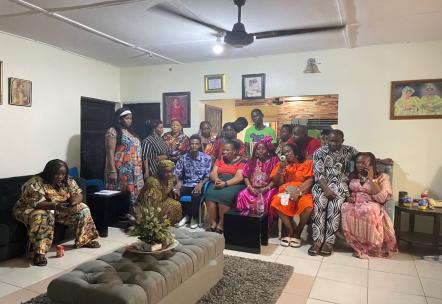
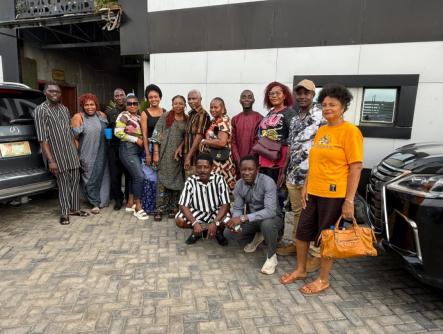
Liberian community members gathered indoors in fellowship

Fellowship

Gatherings and celebrations that kept Liberians connected across distance.

Mutual support

Homes opened, advocacy offered, and care extended in seasons of hardship.

Cultural identity

Heritage carried through community life while living away from Liberia.

Local leadership

Community leaders who organized Liberians long before a national structure existed.

Milestone

2016

OLICON is formally established

A national organization takes shape to promote unity, solidarity, and cohesion among Liberians living within Nigeria’s borders — building on earlier community organizing across the country.

The formation of OLICON

From scattered groups to a national fellowship

According to High Chief Mrs. Tina Waripamoere Keme’s account in the 2026 convention souvenir, OLICON was formally established in 2016.

In his 2026 welcome address, National President Rev. J. Francis Bonwein James recalls that a decade earlier, three Liberian men took on the challenge of uniting different groups of Liberians scattered across Nigeria — a effort that would lead to what became OLICON. The souvenir does not name all three individuals.

Another recollection in the souvenir traces earlier community associations — including a Liberian Women Association that later metamorphosed into a Liberian Association — and recalls that the name OLICON was implemented during a later leadership transition, with Rev. Michael Klechee serving as secretary at that time.
Founding purpose

Why OLICON was established

To promote the unity, solidarity and cohesion of Liberians living within the borders of Nigeria
  • Unity

    Bringing Liberians across Nigeria into one shared fellowship.

  • Solidarity

    Standing with one another in a land away from home.

  • Cohesion

    Strengthening bonds across chapters, regions, and generations.

  • Fellowship

    Creating spaces where Liberians meet, celebrate, and belong.

  • Mutual support

    Responding when members face hardship, conflict, or need.

  • Collective responsibility

    Sustaining a community that no one carries alone.

Early leadership

Those who helped establish and strengthen OLICON

OLICON’s early years were shaped by leaders who carried the responsibility of uniting communities and sustaining the organization’s founding vision.

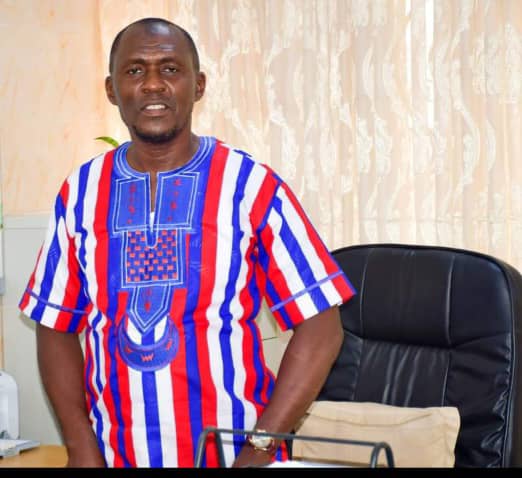
Portrait of Daoda Kanneh, first National President of OLICON

Founding era leadership

Daoda Kanneh

First National President

Current member of the Board of Trustees (BoT)

In his 2026 goodwill message, Daoda Kanneh identifies himself as the first National President of OLICON and a current Board of Trustees member — acknowledging a journey marked by dedication, unity of purpose, and resilience.

Community growth

How OLICON developed

After formal establishment, OLICON grew through chapters, regional coordination, national gatherings, and the everyday work of members who strengthened fellowship across Nigeria.

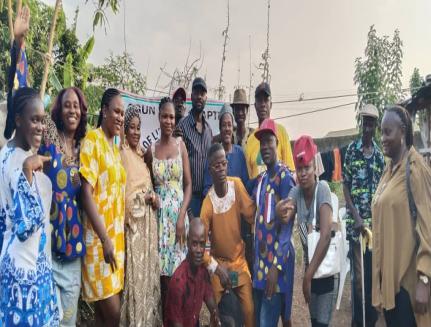
Ogun State Chapter members gathered under an OLICON community banner

State chapters

Local leadership took root in state chapters — including Rivers State, where High Chief Mrs. Tina Waripamoere Keme recalls serving as Chairwoman after OLICON’s formal establishment.

Four regions

OLICON’s jurisdiction covers Nigeria through four recognized regions: Eastern, Western, Northern, and South-South — with regional coordinators supporting chapter life.

National conventions

National conventions became gatherings for fellowship, reports, cultural expression, education, and shared direction — including a convention recalled in 2019 and the 9th Annual National Convention in 2026.

Culture & learning

Music, dance, drama, county exhibitions, educative talks, and children’s learning became part of how the organization sustains heritage and community life.

Resilience through challenges

We still stand

Anniversary messages in 2026 openly acknowledge that OLICON’s journey has included trials and testing times — and the strength required to continue.

Dr. Wede Wallace Edherue, Chairperson of the Abuja Chapter and a Board of Trustees member, wrote that the organization’s journey has not always been smooth — yet despite the storms, “we still stand,” still striving and still committed to lasting change.

High Chief Mrs. Tina Waripamoere Keme recalls that the community continued to grow and thrive through the years, including a convention in 2019, before the challenges brought by the 2020 lockdown.

First National President Daoda Kanneh likewise describes a journey marked by the strength to face every challenge — not only enduring, but growing wiser, stronger, and more committed.

Despite the storms, 'we still stand'. We are not just standing; we are still striving, still working hard, and still deeply committed to making a lasting change.

Dr. Wede Wallace Edherue

Chairperson, Abuja Chapter · Board of Trustees

Important milestones

Moments that mark the journey

Documented moments that mark OLICON’s journey from earlier community life through formal establishment to a decade of fellowship.

  1. Year Pre-2016

    Community organizing before OLICON

    Liberians in Nigeria maintained fellowship through local associations, celebrations, welfare support, and community leadership across different parts of the country.

  2. Year 1999

    Community celebration remembered

    High Chief Mrs. Tina Waripamoere Keme recalls a Liberian community celebration on July 26, 1999 — evidence of organized community life years before OLICON’s formal founding.

  3. Year 2016

    OLICON formally established

    OLICON is formally established as a national organization to promote the unity, solidarity, and cohesion of Liberians living within Nigeria.

  4. Year 2019

    National convention recalled

    Community recollection places a convention in 2019 among the moments of growth before the challenges of the following year.

  5. Year 2020

    Lockdown challenges

    The 2020 lockdown is remembered as a period of challenge within OLICON’s development — part of the testing times the organization has faced and endured.

  6. Year 2026

    10th Anniversary & 9th Annual Convention

    OLICON gathers in Abuja for its 9th Annual National Convention and 10th Anniversary under the theme “Restoring Unity, Redefining Purpose, and Embracing All.”

People who built the legacy

A history made by service

OLICON’s story has been carried by people who served through leadership, welfare, advocacy, mentorship, conflict resolution, and everyday care. The 2026 souvenir honors many such lives — not as a complete roster, but as a reminder that this history is human.

Meet Our Leadership

Humanitarian care

Community elders opened homes, advocated for refugees and displaced Liberians, and helped people rebuild lives in Nigeria.

Local organizing

Leaders in different states built the first structures of fellowship that later connected into a national organization.

Everyday solidarity

Members provided transportation, resolved conflicts, and stood with one another in hardship — service offered without seeking recognition.

Faithful leadership

Past and present officers, chapter leaders, and trustees have sustained OLICON through sacrifice, coordination, and care for the community.

Cultural & community legacy

More than an organization — a living heritage

OLICON’s history is not only administrative. It is also about maintaining cultural identity, creating fellowship, supporting Liberians away from home, and passing tradition between generations.

At national conventions and in chapter life, Liberian culture finds expression — from cultural performances and children’s historical learning to the simple act of gathering with people who share the same heritage.

  • Music
  • Dance
  • Drama
  • County exhibitions
  • Storytelling
  • Fashion
  • Food
  • Language
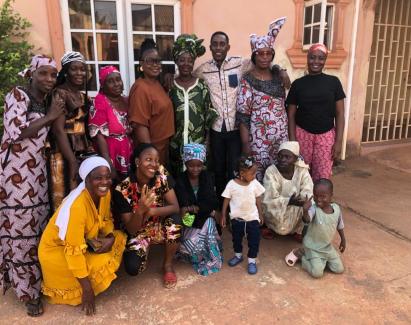
Multigenerational Liberian community members including children
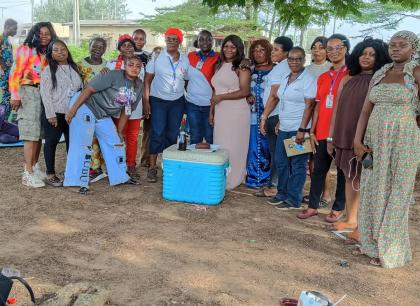
Women from the Liberian community gathered outdoors

A decade marked

A decade of service, unity, and community

The 2026 convention was organized as OLICON’s 10th Anniversary celebration and 9th Annual National Convention — a moment to remember labour, honour service, and look toward the next chapter.

Liberian community history in Nigeria reaches back before OLICON. OLICON’s formal organizational history begins with its establishment in 2016 — and 2026 marks a documented decade of that national fellowship.

Looking forward

Carrying the legacy into the next decade

Anniversary messages call OLICON to renewed unity, redefined purpose, and a community where every member feels valued, seen, and included — building a stronger fellowship through collective responsibility and continued service.

  • Renewed unity
  • Purpose
  • Inclusion
  • Collective responsibility
  • Progress
  • Continued service